
This hybrid seminar, held in Brussel on 1 April 2026 with online participation from different countries in Africa and Latin-America, aimed at clarifying the relationship between Social-Ecological Resilience (SER) and Agroecology. Several questions appeared to be interesting:
- the importance of looking at the values behind the words, not imposing a one-size-fits-all but building from local solutions;
- the need to find new ways of redistributing power to farmers and eaters, and strengthen the connection between them;
- the observation that communities and farmers are stronger when they are organized;
- and the importance to work with limits, with diversity, not against them.
The Belgian Coalition Against Hunger explained their vision describing challenges for agroecology; useful definitions and frameworks; and why agroecology is important. They concluded with 4 key takeaways on the relationship between SER and agroecology:
- the importance of looking at the values behind the words, not imposing a one-size-fits-all but building from local solutions;
- the need to find new ways of redistributing power to farmers and eaters, and strengthen the connection between them;
- the observation that communities and farmers are stronger when they are organized;
- and the importance to work with limits, with diversity, not against them.
Four pilot projects described what they learned on the link between SER and agroecology.
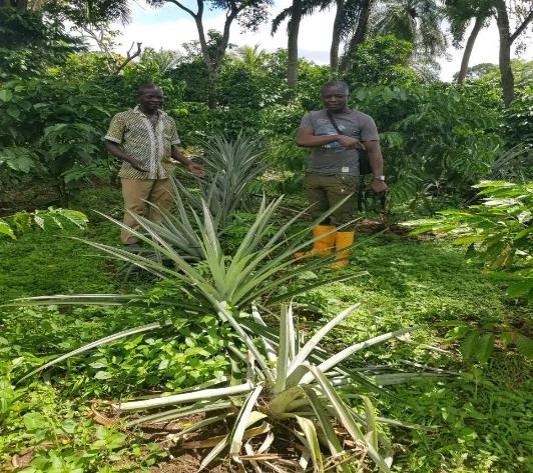
- Congodorpen and CDI-Bwamanda (DR Congo) pointed at agroecological practices to reduce soil degradation; coping with climate hazards, limiting the degradation of natural resources, maintaining livelihoods; diversification of income sources and food security; community organisation and stakeholder involvement; and the need to combine these with awareness-raising and advocacy activities.
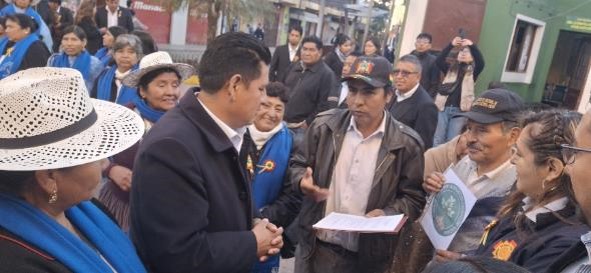
- The pilot project of Humundi and Ciudadanía (Bolivia) worked on community-based agroecological capacity-building, dialogue on knowledge and policy advocacy, and public communication and environmental education. Their lessons include that knowledge is internalised when farmers produce their own inputs; that women’s leadership directly strengthens socio-ecological resilience; and that partnerships are powerful with collaboration between civil society, academia and local government being vital for policies to endure beyond individual political terms of office.
- In Madagascar, partners of Entraide & Fraternité, Louvain Coopération and VIA Don Bosco, exchanged on their practices of agroecology and the link with SER. The following elements are important: strengthening local capacity and synergies between stakeholders; adaptation to environmental change; emphasis on the role of women and community leaders; the need for circular economy and sustainability; and attention given to political and economic challenges.
- A second project in Bolivia by Solidagro and Movimiento Agroecológico Boliviano developed a SER assessment tool with indicators applicable to the context of agroecology stakeholders in Bolivia, i.e. producers, consumers, and communicators. This tool is now available to facilitate changes and adapt strategies relating to the production and consumption of organic food, in line with the protection and care of the environment and human health. Based on SECORES’ theory of change, the organisation works on dissemination, awareness-raising and empowerment. The development of SER indicators built trust amongst producers and consumers, enabling them to measure genuine sustainability and endorsing responsible practices. The Indicators for SER tool for consumers presents questions that go beyond simply seeking an answer; it prompts internal reflection on the consumer’s lifestyle, thereby initiating a debate on the impacts of their consumption patterns.
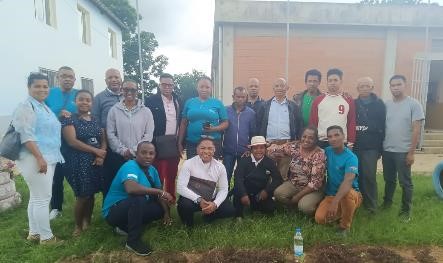
At the end of the seminar, Prof. Marjolein Visser (ULB) gave some feedback from an academic point of view. Some of her insights
- All planetary boundaries seem to be passed. However, the poorest persons contribute the least to passing the planetary boundaries but suffer most from the consequences. The issue of the tipping points should not be forgotten.
- Agroecology is a prism, a way of looking the world and one of the most important things to look at is how to acquire food in a sustainable way with respect for other people and the environment. If there is no respect, there is no sustainability. SER is a sine qua non to be able to look in an agroecological way. And the prism of agroecology will lead us to more SER. So, SER is a state of a system, it’s not a way of looking. agroecology is not a concept, it is a way to look at the world.
- It is very important to take into account the asymmetry of power. People proposing projects have the power. They must be aware that people they are interacting with also have power, but on the local level. And people without power are invisible and discarded of the project.
- Agroecology is offered alongside other options with the risk to be opportunist and pick a bit from different sides.
- A central concept in agroecology that we must stress is the concept of ‘lock-in’ to be considered jointly with ‘path dependency’. It’s about a chain of decisions that locks a system in one direction and makes a systems each time less capable to change direction.
- Local knowledge is important and could be renamed ‘experiential knowledge’. It is essential but often invisible in universities.
- We live in an extractivist society giving preference to short-term efficiency in stead of the long term robustness, which is in fact our social-ecological resilience.