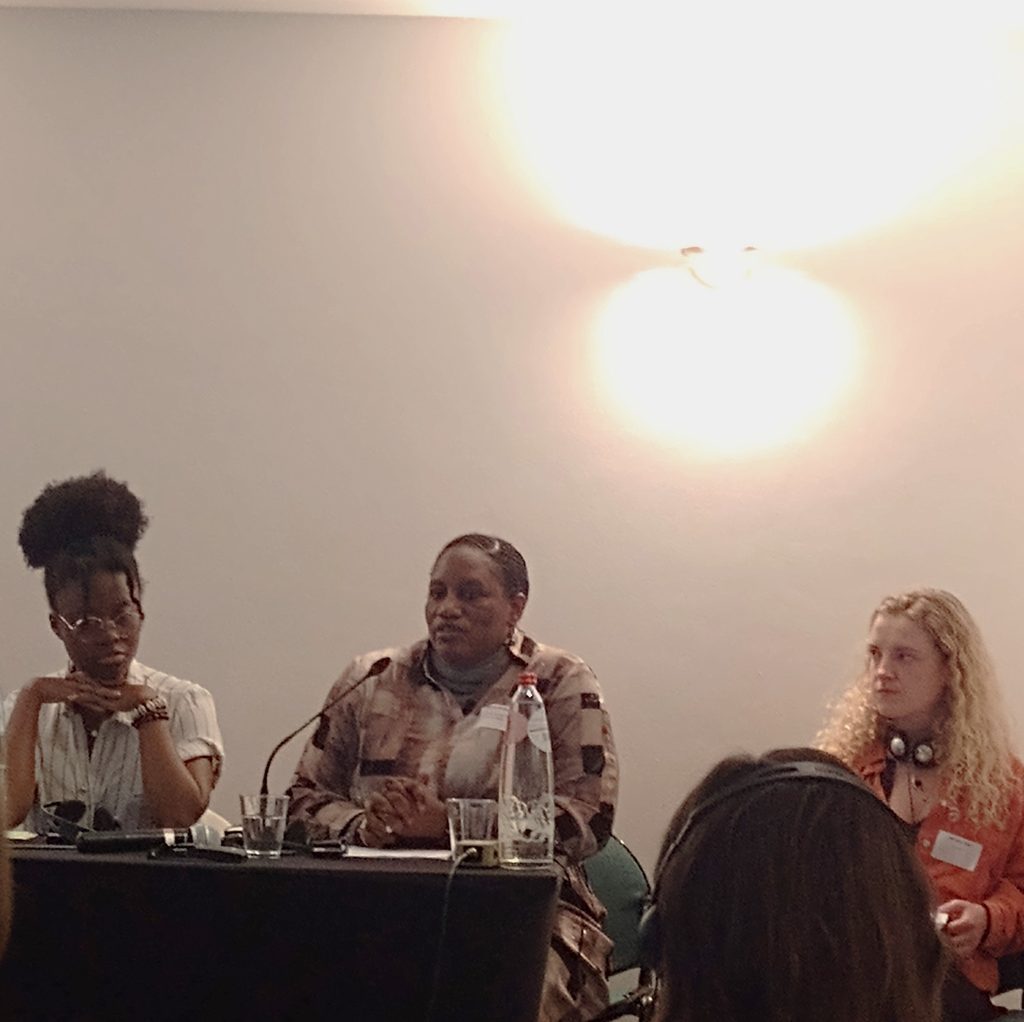
On Thursday 24 September in Brussels, SECORES, 11.11.11 and NGO-federatie organised a round table on feminist leadership, climate justice and collective action. It was an inspiring evening centred on dialogue, new perspectives and enriching conversations.
As climate justice and gender equality are closely linked, the event brought together a diverse range of voices to explore how feminist leadership can inspire meaningful climate action and sustainable change. Through personal experiences, research and perspectives drawn from different generations and backgrounds, we reflected on what feminist leadership means in practice, and how it can help us build fairer and more resilient communities.
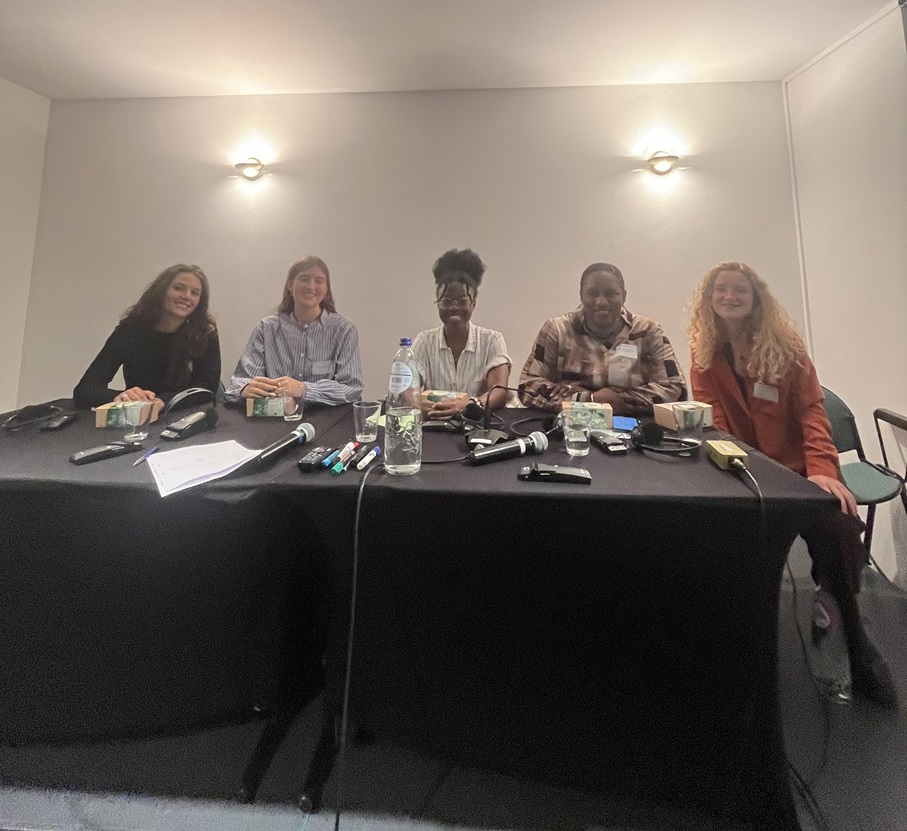
Several guests took part in the discussion, which was moderated by Kiki Berkers, climate expert at 11.11.11:
- Faïda Andreita Mbuluku, researcher at UCLouvain,
- Bintou Traoré, Mali coordinator for Join For Water
- Sara and Linda, representatives of the Youth Advisory Committee at Plan International Belgium
Faïda Andreita Mbuluku offered a committed perspective on the need to place gender at the heart of research and the transformation of our food systems. Through her work on women’s agency in the fields of land tenure and agroecology, she demonstrated how feminist leadership can help pave the way for fairer and more sustainable change. Bintou Traoré shared her experience in the areas of freshwater protection, socio-ecological resilience and women. The voices of young people also took centre stage in the discussion. Sara and Linda joined us to share their experiences and perspectives on girls and the climate crisis, thereby bringing an important intergenerational dimension to the debate.
1. Introduction and commitment for gender and climate
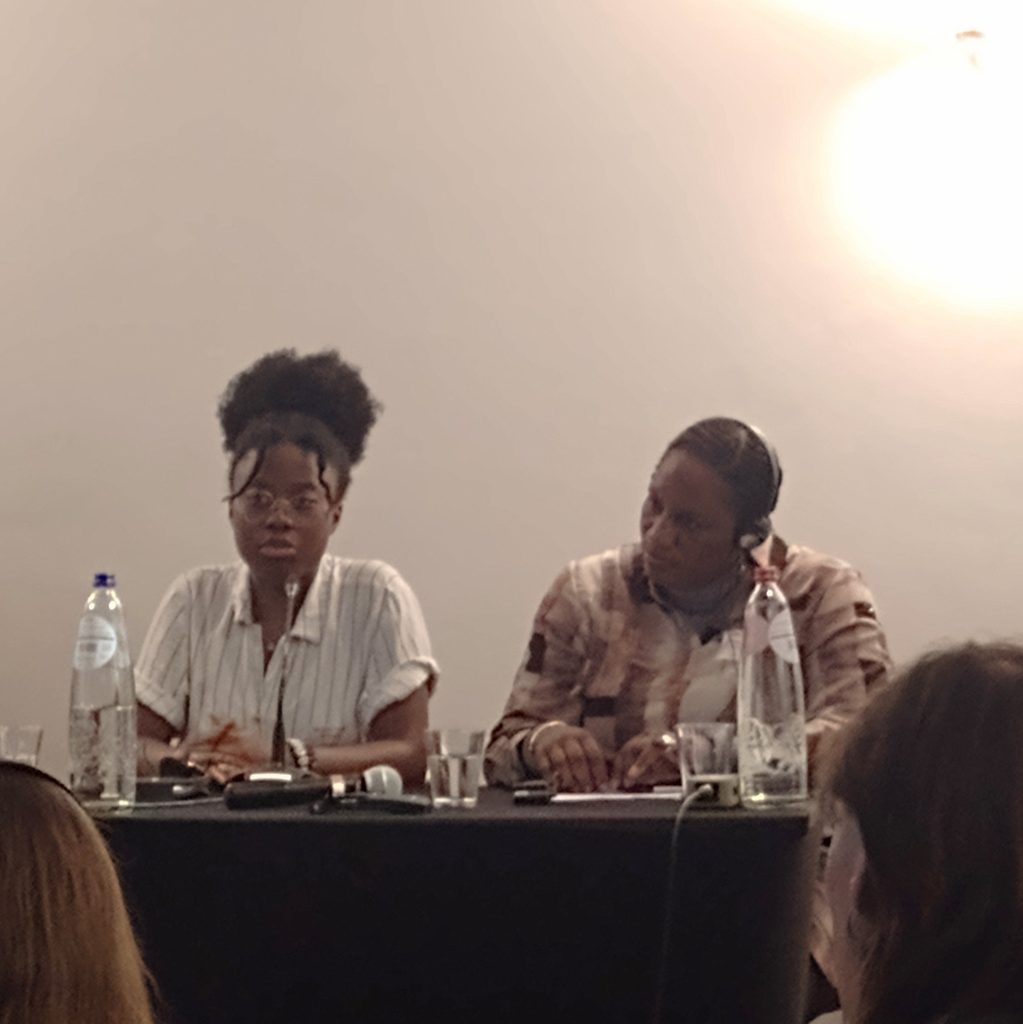
Bintou explained, that at Join For Water, gender issues are addressed across the board within the organisation (at both the decision-making and beneficiary levels) and are integrated into projects, programmes and monitoring mechanisms. In Mali, women play a role in water and natural resources management to meet their families’ needs. Join For Water is developing specific initiatives to build their capacity for economic empowerment, as well as for local governance and access to natural resources. Recognising the influence of social norms on women’s circumstances, its approach involves men and community leaders in order to create an environment more conducive to gender equality and women’s empowerment.
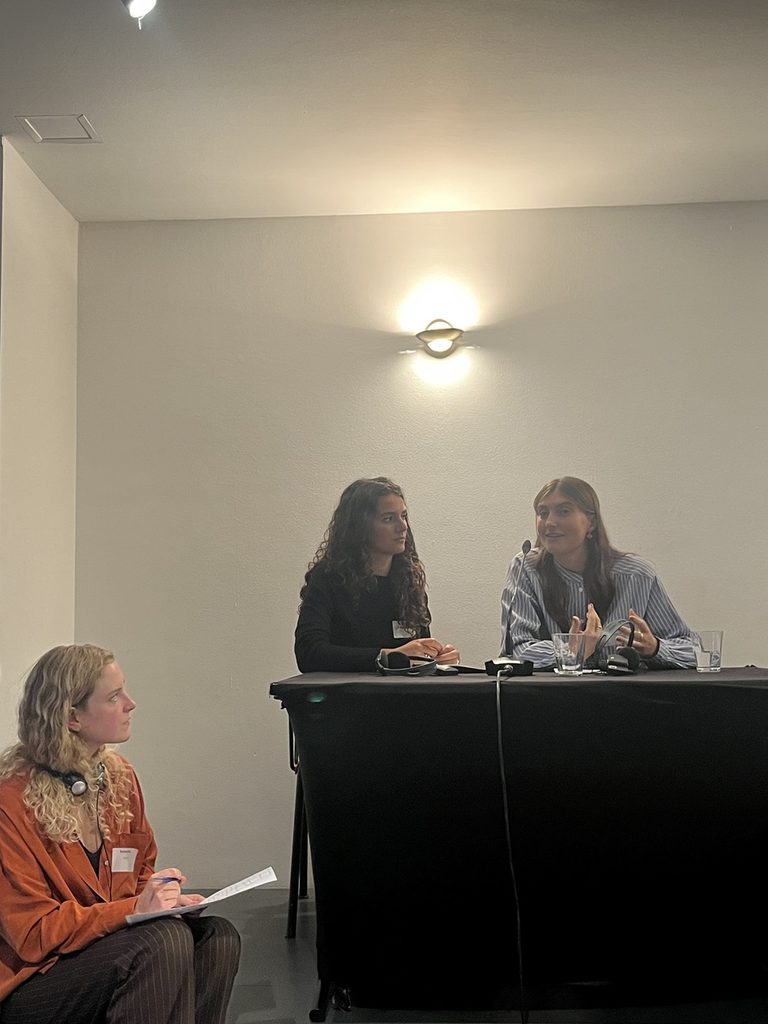
Faïda’s PhD project focuses on analysing the interactions and discrepancies between climate-smart agriculture models and the innovative practices adopted by local farming communities in response to climate change in the north of the DR Congo. The link between gender and climate emerges precisely at this point, at the heart of the research, in the way that international climate models tend to overlook the specific knowledge and innovations developed by communities on the ground; dynamics that are frequently driven by women in their management of land, seeds and the seasons.
The Youth Advisory Panel (YAP is Plan International Belgium’s youth council). In the YAP, young people aged between 15 and 24 make their voices heard, help shape the direction of the organisation and campaign for social and political change. Gender equality, girls’ rights and youth participation are always central themes in this work. In the context of their “Girls in Crises” podcast series, Sara and Linda were introduced to Halima and Fatima (youth activists from Nigeria), who were co-researchers of the study on the gendered impacts of climate change in the Sahel. Before the podcast, the connection between climate change and gender was more abstract to Sara and Linda but they then realised how directly climate change can affect girls’ everyday lives. To illustrate this awareness, they presented a few examples:
- Drought affecting farmlands, low rainfall → water scarcity → safety risks for girls: it is not just that there is a drought. People become thirsty, and girls may be responsible for finding water, far from where they live. This can expose them to safety risks, sexual harassment and abduction by armed groups.
- Drought/floods → causes displacement and fewer economic opportunities → child marriage: climate-related crises can reduce economic opportunities, affecting the ability of households to cover their basic needs. This contributes to situations in which girls are forced to marry because their parents can no longer bear the financial responsibility of caring for them.
- Food insecurity → girls leaving school: girls are often responsible for food within the family. When less food is available, this can contribute to girls dropping out of school, because they have less time for their education.
2. Women: not just a vulnerable group, but actors for change
In her research Faïda shows that women’s knowledge is often overlooked, which is important for climate and land policies. Women’s access to high-level research positions continues to be hampered by very real institutional and social barriers: the rigidity of the academic world, the existence of a glass ceiling in decision-making bodies, and societal pressures surrounding the conventional roles of wife and mother. This exclusion affects not only female researchers, but all women, even though they bear the brunt of the impacts of climate change disproportionately. Global scientific data confirm this paradox: the populations and social groups with the lowest carbon footprint are bearing the brunt of environmental crises. By way of illustration, recent reports on consumption in industrialised countries reveal that men’s carbon footprint is 26% higher than that of women, due to their consumption habits. Yet in the Global South, the physical burden associated with resource scarcity (access to water, farming under climate-related constraints) falls primarily on women.
Under the pretence of valuing women, these institutional narratives merely assign them more responsibilities and physical labour in the field (such as planting trees or managing seeds) without ever giving them a genuine role in political decision-making or research bodies; where power actually lies. Their labour is exploited, but their political voice is ignored. By focusing the debate solely on women’s ‘vulnerability’, attention is diverted from the structural inequalities of power and the economic models that are causing the crisis.
The challenge, therefore, is not to lose heart in this struggle to make our voices heard and to continue to make it clear that alternative forms of knowledge are just as legitimate when it comes to shaping the future of the planet. To give a concrete example from her own work where women have taken the lead, Faïda told about an association of women farmers in Lukula, in Kongo Centrale. At the head of this organisation is a woman, Espérance Nzuzi. Her journey embodies this female agency. In her region, women face direct sexual violence and blackmail simply for the right to access land. Faced with land grabs by certain national and international elites, she did not give up. She led an international advocacy campaign that took her as far as Washington, and she achieved the remarkable feat of securing 1,000 hectares of agricultural land for her association.
In the Malian context, support from men remains limited and varies from one community to another. It is therefore necessary to continue awareness-raising efforts in order to encourage them to become true allies of women. Support from men, particularly community leaders, is essential. Their commitment helps to change attitudes and transform socio-cultural norms. These changes encourage greater participation and involvement of women in decision-making processes at all levels. Join For Water’s approach in Mali fully incorporates this dimension. As part of an 11.11.11-funded project called Niéléni (meaning ‘strong, resilient woman’), we have been able to identify, raise awareness amongst and train men in every village, who now offer their support to women – particularly in terms of moral and psychological support – in the face of societal judgement. These men now, even in the absence of women, discuss women’s rights in village forums to which women are not invited. Bintou is convinced that this dynamic can contribute to the emergence of what we call positive masculinity, in which men play an active role in promoting equality between women and men. This is how we can transform societal norms.
When speaking out about gender equality and youth climate action or about their podcast, Sara and Linda receive different reactions. It depends on the bubble you are in. Some of the reactions are discouraging or downplaying the issue and the seriousness of young people’s/young women’s action on the climate crisis. There can also be an overlap between anti-feminist or gender backlash and resistance to climate action. Some people who see gender equality as threatening or ‘not necessary anymore’ may also see climate policies as unfair, costly or unnecessary. These forms of backlash can come from the same ‘bubble’. When Sara and Linda were in high school, climate marches were highly visible and received a lot of media attention. They assumed that because young people have been very visible in climate movements, the next generation would automatically be engaged with climate action. However, only a few years later, so many young people are not engaged and may even see this kind of engagement as embarrassing (or, who see climate action or volunteering as a way to enrich their CV only). This is why it is important to open the bubble and have conversations with people who have different opinions or who are less engaged.
Today, there is less media attention on the climate crisis. At the same time, younger people have grown up with social media and algorithms playing a much bigger role in shaping their values and attitudes (example: young people in Belgium are becoming less tolerant to LGBTQ+ people). There is concern about how quickly boys and young people can encounter anti-feminist content and the manosphere on platforms such as TikTok. Algorithms can repeatedly expose young people to messages emphasising success and money, while caring about the planet, nature, gender equality, international solidarity, or generally caring for people beyond your immediate environment can be framed as a feminine value. This makes the current media environment an important part of the discussion about young people’s leadership and participation. It is why (climate change and gender-transformative) education is so important as a counter-weight, and why young people need accessible spaces where they can encounter different perspectives.
3. Looking to the future
Start with education as the foundation for youth civic/political participation is the overall storyline for Linda and Sara. Young people need accessible opportunities and tools that move them towards structural participation in decision-making, including meaningful exchange with young people directly affected by climate change.
- Education should give young people the tools to participate
- Education as a counterweight to social media
- Participation needs to start young: increase structural opportunities for young people to participate meaningfully in decision-making at different levels
- Make these opportunities visible and accessible
- Participation needs to happen at different levels: At the federal level, youth participation should become more structurally embedded in policy processes, also about international cooperation: e.g. the Youth Participation Lab.
- People affected by climate change need to be involved. This is particularly important in international cooperation: young people, especially girls, who are directly affected need to be involved in decisions that concern them. Conversations with people like Halima and Fatima, who are very similar in age and gender, make the issue much more personally relevant.
As a final reflection on climate change, Linda and Sara stated that climate change is not something that only happens “somewhere else”. This summer’s bush and peat fires in Belgium are a reminder that these impacts are not distant, but already affecting us. Young people who are affected today are not a distinct group; we may find ourselves in a similar situation tomorrow.
According to Bintou, increasing female leadership faces a number of challenges. She highlighted discriminatory socio-cultural norms, limited access to education and economic resources, the heavy burden of domestic responsibilities, and the under-representation of women in decision-making bodies. The main challenge lies in answering the question: ‘How can men and women work together to bring about more equitable change?’ And once we have answered this question, we will be able to provide appropriate solutions to address gender-related challenges.
What works is looking at gender beyond the participation or presence of women in projects or decision-making bodies. To do this, it is important to analyse, understand and then transform the relationships between women, men, girls and boys, as well as social norms. It is also important to involve men in gender equality initiatives so that they are seen as allies rather than rivals. It is not helpful to ignore the socio-cultural and economic contexts in which women live when conducting gender analyses and adopting gender-based approaches. Or to limite ourselves solely to political aspects: it is important to work at the grassroots level, i.e. at community level, to influence the socio-cultural norms embedded in our societies; this requires time and tailored approaches. Excluding men from a gender equality initiative is unlikely to improve the situation.
In order to implement Join For Water’s climate programme, more allies are needed who will support our cause in areas to which we do not have access, by which Bintou thinks of men and decision-makers. To achieve this, we need to adapt our approaches to better involve other stakeholders, so that they become true allies and can convey women’s messages in their absence. Finally, initiatives on women’s economic empowerment and female leadership need to be continued.
For Faïda, to continue to provide female leadership and advance her research, her primary need is institutional and collective. Academic spaces and networks are needed, such as this evening’s event, because meeting peers and practitioners who are willing to push the boundaries is a real source of motivation. She needs open-minded leaders who are prepared to legitimise interdisciplinary research that challenges purely technocratic approaches. If Faïda had to change just one thing today, a single fundamental perception, it would be the way we conceive of the role of gender within frameworks for understanding climate issues. She would like us to understand that the issue of gender must no longer be a mere afterthought at the end of a report. It must not be a superficial box ticked to please funders or to ‘humanise’ a technical project. Gender is a cornerstone. It is the very structure upon which access to resources, vulnerability to crises and the development of survival strategies are built. Changing this perception means stopping viewing women working on the ground as mere performers of environmental tasks, and starting to listen to them as decision-makers and producers of legitimate knowledge. It is by shifting our epistemological perspective in this way that we will build climate and land policies that finally reflect the reality of our societies.
Organized together with